
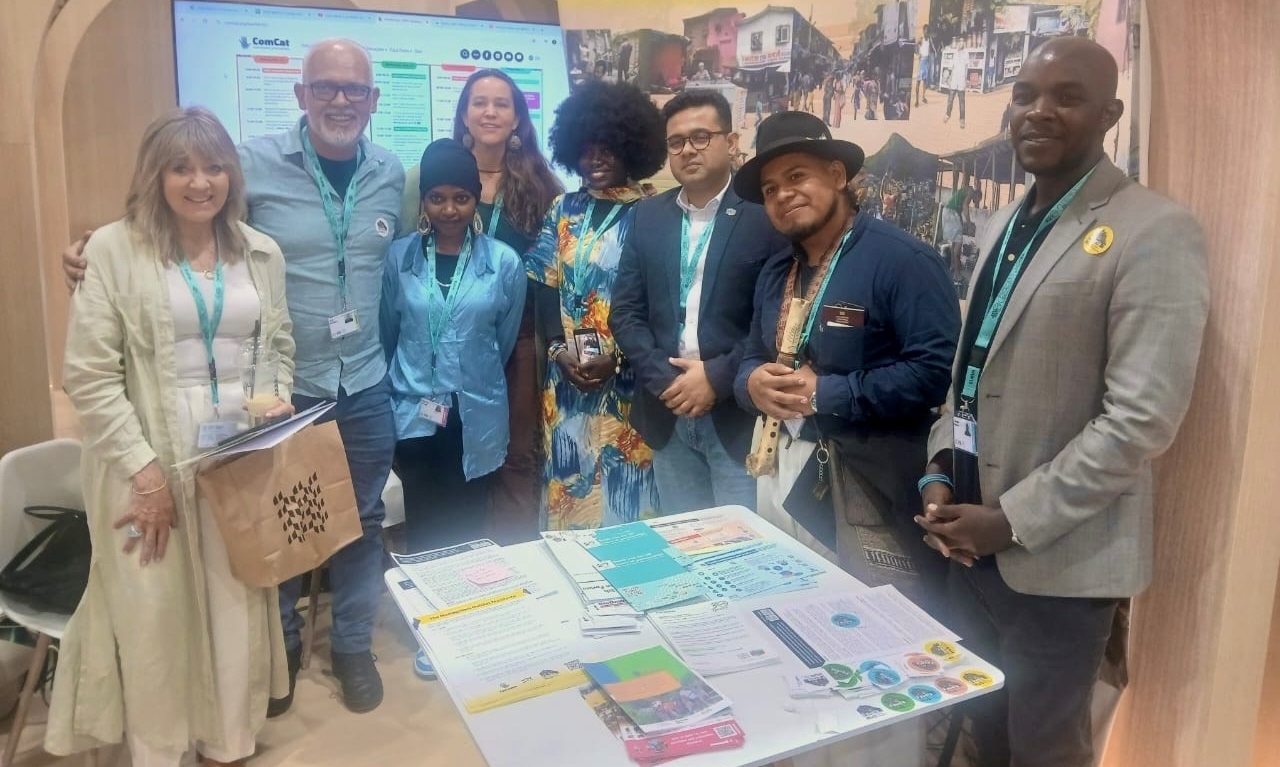

On May 19, 2026, at the Favela Hub in the World Urban Forum Exhibition Space in Baku, Azerbaijan, a new paper on youth-led climate emergency response was launched by co-authors from community organizations, universities, and the United Nations. World Urban Forum attendees gathered to discuss what Mathare’s youth organizations built across two emergencies and how that experience can be applied elsewhere.
“There is nothing for us, without us.”
— Faith Adoyo, Upcyclers Creative Hub, Mathare

The Climate Emergency
Mathare sits in a valley along the Mathare River in Nairobi, Kenya. Over 200,000 people live in three square kilometres, one of the densest urban environments in Africa. The river runs along the valley floor, and the settlement has been built around and above it over decades without the drainage infrastructure, flood barriers, or land tenure protections that would reduce risk.
On the night of April 23, 2024, the river overflowed its banks. By morning, homes were gone. Within a month, more than 7,000 people had been displaced and at least 15 residents had lost their lives. Schools and sanitation facilities had collapsed. Debris and mud blocked the settlement’s narrow passageways. Survivors sheltered in overcrowded camps in local schools and churches, where shortages of food and clean water compounded the crisis. External institutional response was slow and, in some cases, made the situation worse. The climate emergency had landed and Mathare’s youth organizations were already responding.
The Community and Youth-Led Response
Youth from the Mto Wangu Initiative and the Mathare River Regeneration Network were first responders, pulling neighbors from the river and attempting to save and salvage their homes. They had limited safety gear but were armed with local knowledge and the organizational relationships built over years of community work. Young people formed rescue lines in floodwater while organizing food and shelter on higher ground. The two organizations had convened over 30 community groups, conducted headcounts in informal camps, and identified the 150 households in most urgent need.
What followed was a sustained, coordinated response. Relief hubs opened at the youth centre and two local schools. Aid distribution was managed through public forums where the committee explained openly who would receive what and why. Supported by UN-Habitat, the United Nations Environment Programme (UNEP), and the Canadian High Commission, the response delivered emergency relief to over 4,000 households and restored sanitation infrastructure.
Working in partnership with UNEP, Mto Wangu used geographic information system (GIS) tools to document flood impact across all four wards of Mathare, identifying high-risk zones, mapping evacuation routes, flagging drainage gaps, and marking areas of potential relocation need.
That data became the basis for a community storymap, “Empowering Resilient Communities for a Sustainable Future: Climate-Driven Water Insecurity and Environmental Health Risks in Mathare’s Informal Settlements,” documenting the environmental and public health conditions driving flood vulnerability. The mapping gave youth organizations evidence-based standing when engaging county officials on infrastructure investment, moving the conversation from relief to structural risk reduction.
View the UNEP Mathare Storymap
The longer-term recovery included converting a degraded riverbank into a community green space, clearing waste, planting trees, and installing benches and a playground on land that had amplified the disaster. The park reclaimed flood-prone riparian land along the Mathare River and restored ecosystem function. It also created paid work for youth at a time of widespread economic disruption, integrating livelihoods into the recovery from the start.
This was not a spontaneous reaction. It drew directly on experience, relationships, and organizational capacity built during the 2020 COVID-19 response, the foundation documented in the first study in this series.
What the Research Found
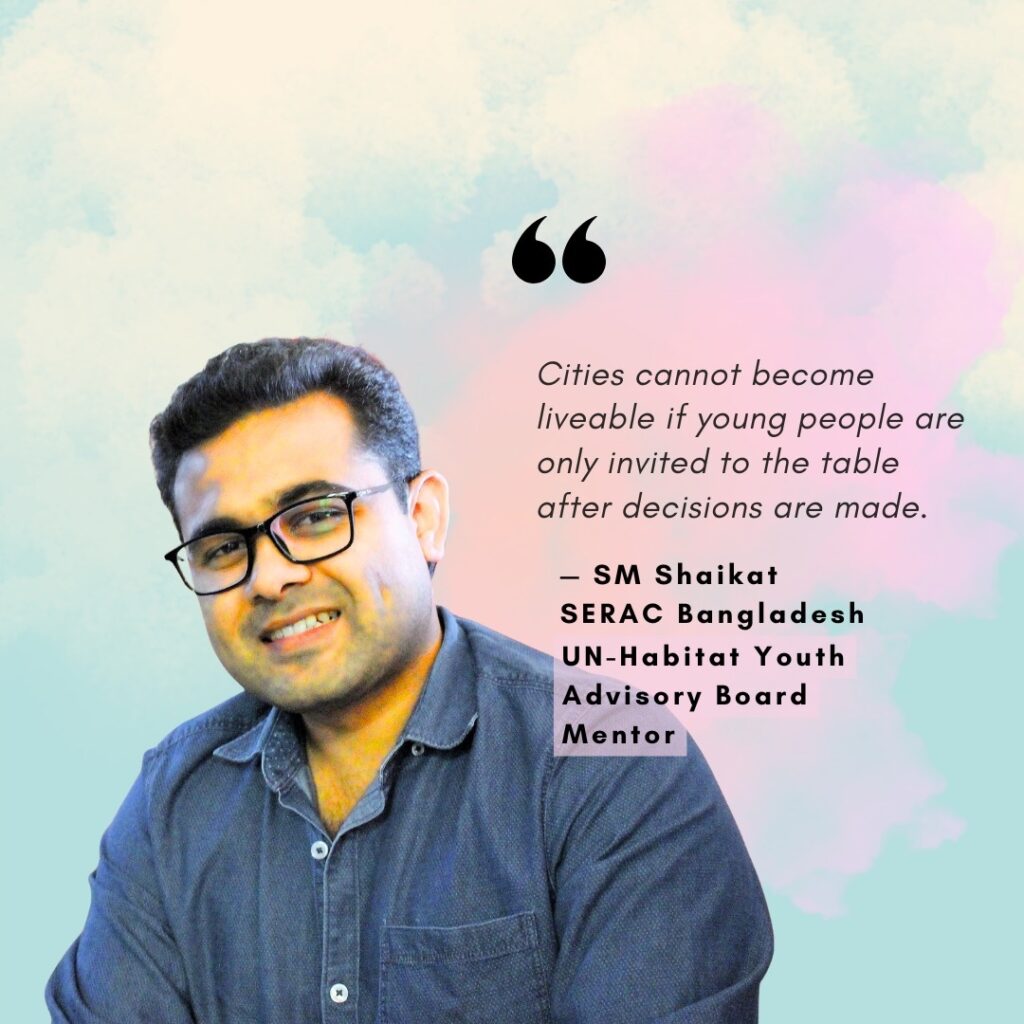
The paper was co-authored by the panelists who presented at the World Urban Forum session: Cherie Enns from the University of the Fraser Valley, George Gachie from UN-Habitat, Safrina Irungu and Faith Adoyo from the Mto Wangu Initiative in Mathare, and SM Shaikat from SERAC-Bangladesh, along with co-authors Doug Ragan from Carleton University and Turning Tides Managing Director, Mary Hiuhu from UN-Habitat, Raphael Obonyo from the Obonyo Foundation, and Olga Tsaplina.
The central finding is that the response worked because the organizations that led it already existed, were already trusted, and had already built the operational systems and inter-organizational relationships the emergency required. The Mto Wangu Initiative, the Mathare Environmental Conservation Youth Group (MECYG), and the Mathare River Regeneration Network (MRRN) were not assembled in a crisis. They were activated by one.
That activation depended on several enabling conditions. Youth were engaged at every stage, from damage assessment through to distribution, community planning, and flood risk mapping, not as volunteers executing decisions made elsewhere, but as co-leaders whose involvement gave the response local legitimacy. External partners were most effective when they played an enabling role: providing funding, technical support, and access to networks while deferring to priorities identified by the community itself. The Canadian High Commission’s decision to fund Mto Wangu directly, rather than through intermediaries, was cited as a model of how that kind of support can work in practice.
Sustaining the response over time required addressing the economic reality that youth could not afford to volunteer indefinitely. Stipends, meals, and cash-for-work opportunities kept people engaged beyond the immediate emergency and ensured that the response did not simply exhaust the community organizations it depended on.
The research also identifies the limits of what community response can achieve alone. Drainage infrastructure, land tenure security, and long-term preparedness funding are structural issues that require sustained government investment and policy change. The response in Mathare was effective, but it operated against a backdrop of decades of infrastructural neglect, and that context has not changed.
What followed was a sustained, coordinated response. Relief hubs opened at the youth centre and two local schools. Aid distribution was managed through public forums where the committee explained openly who would receive what and why. Supported by UN-Habitat, the United Nations Environment Programme (UNEP), and the Canadian High Commission, the response delivered emergency relief to over 4,000 households and restored sanitation infrastructure.
Working in partnership with UNEP, Mto Wangu used geographic information system (GIS) tools to document flood impact across all four wards of Mathare, identifying high-risk zones, mapping evacuation routes, flagging drainage gaps, and marking areas of potential relocation need.
That data became the basis for a community storymap, “Empowering Resilient Communities for a Sustainable Future: Climate-Driven Water Insecurity and Environmental Health Risks in Mathare’s Informal Settlements,” documenting the environmental and public health conditions driving flood vulnerability. The mapping gave youth organizations evidence-based standing when engaging county officials on infrastructure investment, moving the conversation from relief to structural risk reduction.
View the UNEP Mathare Storymap
The longer-term recovery included converting a degraded riverbank into a community green space, clearing waste, planting trees, and installing benches and a playground on land that had amplified the disaster. The park reclaimed flood-prone riparian land along the Mathare River and restored ecosystem function. It also created paid work for youth at a time of widespread economic disruption, integrating livelihoods into the recovery from the start.
This was not a spontaneous reaction. It drew directly on experience, relationships, and organizational capacity built during the 2020 COVID-19 response, the foundation documented in the first study in this series.
The Youth-Led Climate Emergency Response Model Model
The paper proposes a seven-component Youth-Led Climate Emergency Response Model, covering community empowerment and youth leadership; inclusivity and equity in participation; multi-stakeholder partnerships; communication and community education; resource mobilization and livelihood integration; building back better through long-term upgrading; and policy support and institutionalization.
The emerging goal of the youth-led emergency series is to test and refine that model across two different emergency types, a pandemic and a climate disaster, so that it can be applied and adapted in informal settlements elsewhere. The World Urban Forum session extended that conversation beyond Mathare. SM Shaikat from SERAC-Bangladesh brought the experience of the Bangladesh Urban Youth Council Network, whose work on youth-led urban governance across partner cities in Bangladesh was recognized at WUF13 as one of the Top 10 Outstanding Practices globally, adding a cross-regional dimension to the evidence base.
The question the series is working toward is not whether youth-led organizations in informal settlements can lead effective emergency response. Mathare has demonstrated that twice. The question is what governance, financing, and policy conditions need to be in place for that capacity to be recognized, supported, and sustained before the next emergency arrives.
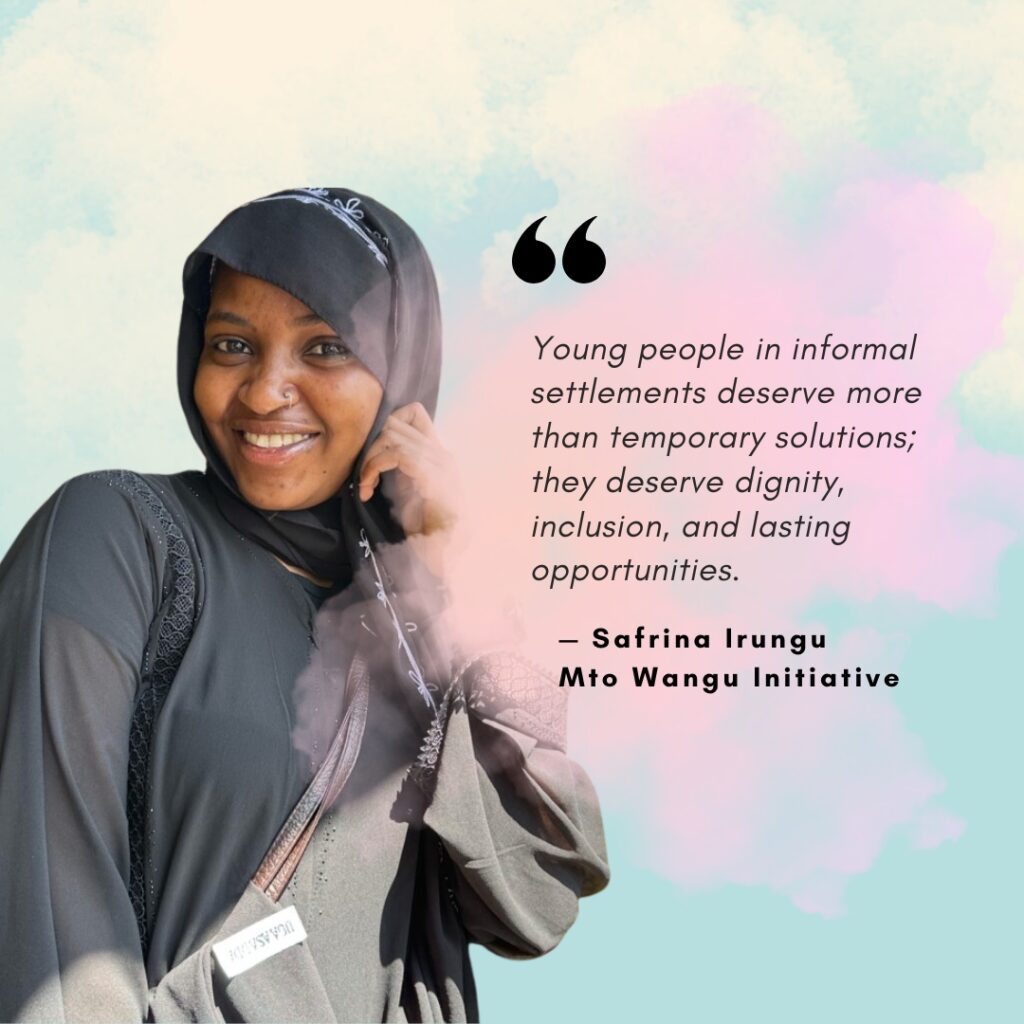
“Young people in informal settlements deserve more than temporary solutions; they deserve dignity, inclusion, and lasting opportunities and that’s why we are here at the World Urban Forum to represent them and let their voices be heard.”
— Safrina Irungu, Mto Wangu Initiative, Mathare
This is the second in a series of publications examining youth-led emergency response in Mathare, Nairobi’s second-largest informal settlement. The first documented how youth organizations led the COVID-19 response in 2020, work recognized as a runner-up for the United Nations Secretary-General’s Award for Innovation. Together, the two studies are building toward a scalable, evidence-based model for youth-led emergency response in informal settlements globally.
Read the Research
Youth-Led Response to Climate Emergencies in Informal Settlements: A Case Study of Mathare, Nairobi, Kenya
City Development: Issues and Best Practices, Vol. 2, 2026
https://doi.org/10.18192/cdibp.v1i2.7570
Youth-Led Response to COVID-19 in Informal Settlements: Case Study of Mathare, Nairobi, Kenya
In: The City in an Era of Cascading Risks, Springer, 2023
Mto Wangu Initiative policy brief on the 2024 floods
UNEP Mathare Storymap: Empowering Resilient Communities for a Sustainable Future
https://storymaps.arcgis.com/stories/41eb4771bfb44f0ebb3d6e915f65bd59?play=true&speed=medium